Yes, Dental X-Rays are safe and necessary— and at our personalized dental clinic, we take every step to ensure you receive the highest-quality, lowest-risk imaging possible. With today’s advanced digital dental X-ray technology, patients are exposed to extremely low levels of radiation while gaining invaluable insight into their long-term oral health. Whether you’re isiting us for a routine checkup or preparing for more advanced care like dental implants, orthodontics, or restorative dentistry, dental X- rays are an essential part of creating a plan that’s uniquely tailored to your smile.
What Are Dental X-Rays?
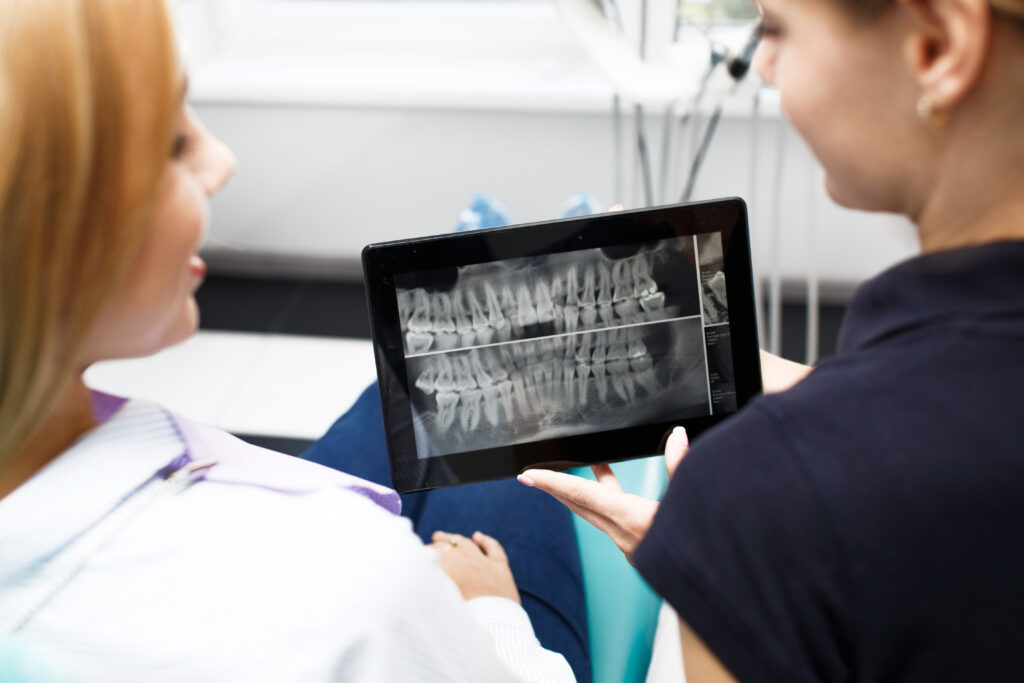
Dental X-rays are special images that allow dentists to see areas of your teeth, gums, and jaw that are not visible during a regular checkup. They reveal hidden cavities, infections at the root or bone level, bone loss due to gum disease, impacted wisdom teeth, and the development of permanent teeth in children. By providing a clear picture of the inner structures of your mouth, dental X-rays help us detect problems early and create personalized treatment plans that protect your long-term oral health.
How Safe Are Dental X-Rays?
Modern digital dental X-rays are extremely safe and use very low levels of radiation—up to 90% less compared to older film X-rays. The exposure from a single dental X-ray is even lower than what you naturally receive from a short airplane flight or a day spent outdoors. To ensure maximum safety, we also use lead aprons and thyroid collars to reduce radiation to the rest of the body. Our clinic follows strict safety guidelines, so you can feel confident and comfortable during every visit.
How are dental X-rays done?
Before taking dental X-rays, a technician may place a lead apron over your chest and may wrap a thyroid collar around your neck. This helps protect you from excess radiation. You’ll sit or stand in front of the machine while the technician positions the film or sensor and takes the image. Stay as still as possible.
Why Special Scans Like OPG or CBCT Are Sometimes Needed
Certain conditions require more detailed imaging. An OPG (panoramic scan) captures the entire mouth in one image and is useful for assessing wisdom teeth, jaw joints, and orthodontic needs. A CBCT (3D scan) provides a three-dimensional view of the teeth, jawbone, and surrounding structures. This advanced scan is used only when needed—for example, for dental implants, complex infections, or detailed surgical planning. Both scans are safe, low in radiation, and recommended only when they provide information that regular X-rays cannot.
Are X-Rays Safe for Children and Pregnant Women?
Dental X-rays are safe for children, and in fact help monitor the growth and development of their teeth and jaws. Kids often need X-rays more frequently because changes occur rapidly as they grow. During pregnancy, routine X-rays are usually postponed, but emergency X-rays can be safely taken with full protection if absolutely necessary. At Solitaire Family Dentistry, your safety always comes first, and every precaution is taken before recommending any imaging.
How Often Do You Actually Need Dental X-Rays?
The frequency of X-rays depends on your oral health. Patients who experience frequent cavities may need them every 6–12 months, while those with healthy mouths may only need them every 1–2 years. X-rays are also necessary before major treatments like implants, braces, or root canals, and during emergencies such as toothaches or trauma. We never take unnecessary X-rays; every scan has a clear purpose.
NOTE:
Dental X-rays and special scans play a crucial role in maintaining long-term oral health. They are safe, quick, and provide invaluable information that helps prevent future complications. At Solitaire Family Dentistry, KPHB, we use the latest digital technology to ensure minimal radiation exposure and maximum diagnostic accuracy. You can trust that we will recommend X-rays only when they are truly necessary for your care.