Immediate dentures provide a seamless transition for patients who need tooth extractions but wish to avoid spending a single day without a smile. Because these dentures are custom-made prior to your extraction appointment, they are ready to be fitted the moment your natural teeth are removed. This guide explores everything you need to know about this restorative option, including the benefits, the recovery process, and whether they are the right fit for your needs.
What are Immediate Dentures:
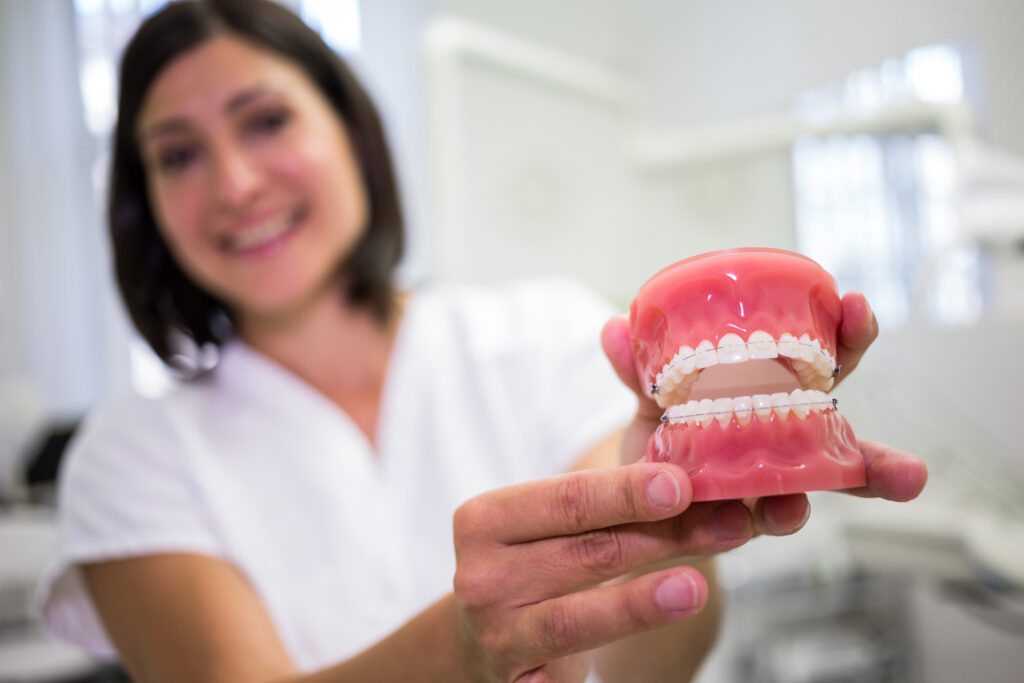
An immediate denture is a removable dental prosthesis designed for placement on the very same day your natural teeth are extracted. Unlike traditional dentures, which are made after the gums have healed, these are fabricated in advance. They can be designed to replace a single missing tooth or a full set of sixteen teeth in either the upper (maxillary) or lower (mandibular) jaw.
Types of Immediate Dentures
1. Conventional (Classic) Immediate Denture (CID) These are designed to be used as a long-term solution. They are placed immediately after surgery and are later professionally relined once the jawbone has finished its natural healing and reshaping process.
2. Interim / Transitional Immediate Denture (IID / TID) These are strictly temporary placeholders used only during the healing phase. Once the gums and bone have stabilized, they are completely replaced by a final, permanent set of dentures or implants.
Variants by Design / Flange / Surgery Depending on your anatomy, dentures may be designed as flanged, partially flanged, or open-face (socketed). These may also be used in conjunction with surgical procedures like alveoloplasty to smooth the jawbone for a better fit.
Advantages:
Immediate restoration: You leave the clinic with a complete set of teeth, ensuring no gap in your smile or social confidence.
Preservation of aesthetics: These dentures help maintain the natural fullness of your lips and cheeks, preventing a “sunken” facial appearance.
Functional continuity: While there is a learning curve, they allow you to continue speaking and eating relatively normally during the recovery phase.
Preservation of oral structures: Acting as a protective “bandage,” they cover extraction sites to prevent irritation from food and help reduce the risk of complications like dry socket.
Aesthetics and Planning: Having some natural teeth present allows the lab to more accurately replicate your original tooth color, shape, and alignment.
Disadvantages:
Need for adjustments: As your gums heal and shrink over a 6-to-8-month period, the denture will become loose and require multiple chairside adjustments.
Temporary nature: Because the jaw changes shape during healing, these are often an interim solution and not a permanent substitute for final dentures or implants.
Discomfort: Initial soreness is common, and some patients with sensitive palates may experience a temporary gag reflex.
Speech and eating challenges: Adapting to the new bulk of the denture can make certain sounds (like ‘s’ and ‘t’) difficult at first. Additionally, sense of taste may feel slightly muted.
Cost: Since these require separate fabrication and frequent follow-ups, they represent an additional investment alongside the cost of the permanent restoration.
Indications for immediate denture:
Presence of multiple “hopeless” teeth due to advanced decay or gum disease.
Patients with high social or professional demands who cannot afford time without teeth.
The need to maintain proper jaw alignment and facial muscle support.
Protecting the soft tissues and residual ridge during the initial healing phase.
Contraindications:
Uncontrolled systemic health issues like diabetes or cardiac disorders that impair healing.
Active oral infections, such as abscesses, that require clearing before a prosthesis can be worn.
Patients who cannot commit to frequent follow-up visits for adjustments.
Severe bone loss that provides inadequate support for a denture.
History of head or neck radiotherapy.
Limited time or financial resources to manage the necessary relines and eventual replacement.
Immediate Denture Procedure:
Pre-Extraction Records: Impressions and bite registrations are taken, and your natural tooth shade is selected.
Denture Fabrication: Our lab crafts the denture based on these initial records.
Tooth Extractions & Denture Insertion: The remaining teeth are removed, and the denture is immediately placed.
Initial Adjustments: Fine-tuning is done right away to ensure comfort and proper bite.
Post-Operative Care: You will receive specific instructions on how to manage the first 24 hours.
Follow-Up Visits: We monitor your healing and adjust the denture as your gums change shape.
Final Denture Fabrication: Once healing is complete (usually after 6 months), a permanent set is created for long-term use.
Healing of Immediate Dentures:
The healing process is dynamic. For the first 24 hours, it is critical to keep the denture in place—even while sleeping—to act as a pressure bandage and control swelling. During the first week, you may notice increased saliva and mild speech changes. Over the next 4 to 8 weeks, as the gums “shrink,” the denture will likely feel loose. By the 3 to 6-month mark, bone remodeling stabilizes, and a permanent reline or a new final denture will be required to ensure a secure fit.
Care and Maintenance of Immediate Dentures:
The 24-Hour Rule: Do not remove the denture for the first full day; doing so may cause swelling that prevents you from putting it back in.
Avoid Irritants: For the first few days, avoid smoking, using straws, or vigorous spitting.
Cleaning: After the first 24 hours, remove the denture briefly to clean it with mild soap and a soft brush. Never use regular toothpaste, as it is too abrasive.
Saltwater Rinses: Gently rinse your mouth with warm salt water to soothe extraction sites.
Overnight Soaking: Once the initial healing phase is over, soak your dentures in water or a cleaning solution overnight to keep the material hydrated.
Stay in Touch: Notify your dentist immediately if you develop painful sore spots or if the denture becomes significantly loose.
Note: Immediate dentures are a practical, aesthetic bridge to your new smile. While they require patience and regular professional adjustments, they protect your health and confidence during a major transition. To discover if this is the right path for you, please visit Solitaire Family Dentistry or call us at 6281497455 to schedule a consultation with our expert team in KPHB, Hyderabad