
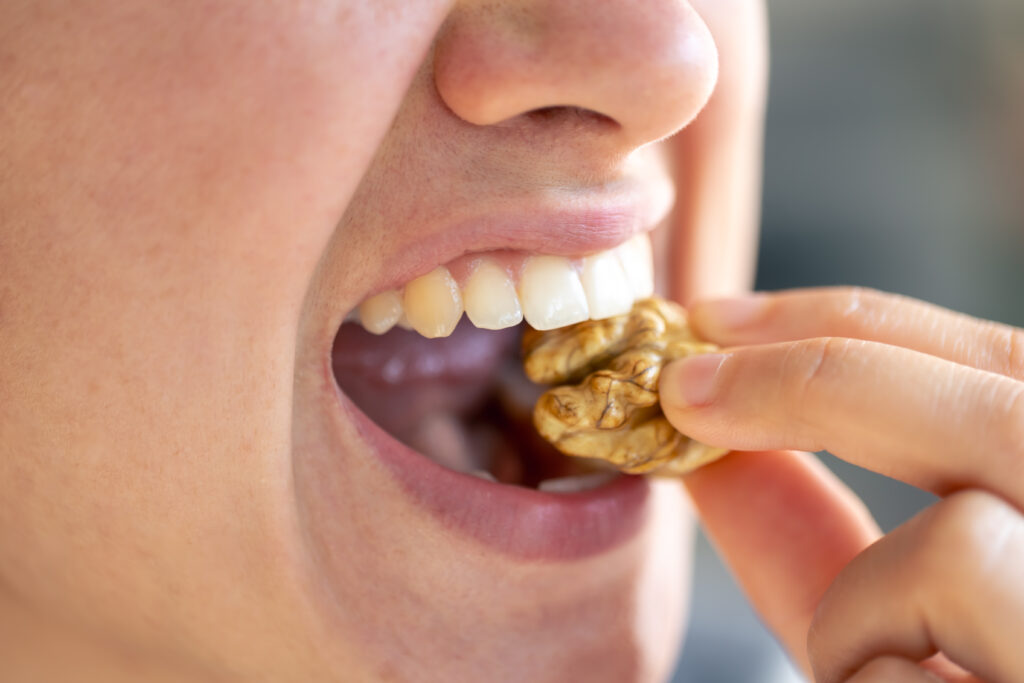
Food getting stuck between teeth is a common issue many people experience. While it may seem like a minor inconvenience, frequent food lodgement can sometimes point to an underlying dental concern. At Solitaire Family Dentistry, KPHB, Hyderabad, we often see
patients with this problem—and addressing it early can help prevent bigger oral health issues.
When food repeatedly gets trapped in the same spot, it can irritate the gums, encourage bacterial growth, and increase the risk of tooth decay and gum disease.
Common Causes of Food Getting Stuck Between Teeth
There are several reasons why food may get lodged between your teeth:
- Gaps between teeth: Natural spacing or shifting teeth can allow food to slip into small spaces while chewing.
- Cavities between teeth: Tooth decay can create tiny holes or rough surfaces where food particles easily collect.
- Worn or poorly shaped fillings: Old or uneven fillings may leave small gaps that trap food.
- Gum recession: When gums pull away from teeth, they form pockets where food can accumulate.
- Misaligned or crooked teeth: Uneven positioning can create tight or irregular spaces that catch food.
Signs That Food Lodgement Is Becoming a Problem
Occasional food trapping is normal, but persistent food lodgement may signal a dental issue. Some warning signs include:
- Food getting stuck in the same place repeatedly
- Pain or discomfort while chewing
- Bleeding gums when flossing
- Swollen or tender gums between teeth
- Persistent bad breath
- Sensitivity to cold or sweet foods
If these symptoms occur frequently, it may be time to visit a dentist.
Why Ignoring Food Lodgement Can Damage Teeth
Ignoring repeated food lodgement can lead to serious oral health problems over time:
. Trapped food feeds bacteria that produce acids, leading to cavities
. Gum irritation can progress into gum disease
. Decaying food particles contribute to bad breath
. Early diagnosis and treatment can help you avoid more complex dental procedures later.
Treatments Available at Solitaire Family Dentistry to Fix Food Lodgement
At Solitaire Family Dentistry, our experienced dental team identifies the root cause and
provides personalized treatment solutions, such as:
. Replacing or adjusting dental fillings that have created gaps
. Treating cavities between teeth with fillings
. Orthodontic treatment such as braces or clear aligners for misaligned teeth
. Gum treatments if gum recession or gum disease is present
. Dental implants or bridges to replace missing teeth and restore proper spacing
. Dental crowns to restore damaged teet
These treatments help restore proper contact between teeth and prevent food from getting trapped.
Temporary Things Patients Can Do at Home
While professional treatment may be required for long-term solutions, patients can take a few steps at home to manage food lodgement.
. Floss after meals to remove trapped food particles. Flossing alone doesn’t solve
structural gaps, but it helps prevent plaque buildup in these spaces.
. Use interdental brushes to clean spaces between teeth
. Rinse your mouth with water after eating
. Use a water flosser to clean hard-to-reach areas
. Brush twice daily with a soft-bristle toothbrush
Avoid using sharp objects like pins or needles to remove trapped food, as they can injure the gums.
NOTE:
If food keeps getting stuck between your teeth, don’t ignore it. Visit Solitaire Family Dentistry in KPHB, Hyderabad for a thorough evaluation and personalized care. Early treatment can protect your teeth, gums, and overall oral health.
Frequently Asked Questions
Occasionally yes, but frequent trapping in the same spot may indicate a dental issue.
Common reasons include gaps between teeth, cavities, worn fillings, gum recession, or misaligned teeth.
Yes, trapped food promotes bacterial growth, causing bad breath, cavities, and gum problems.
Use dental floss, interdental brushes, or a water flosser. Avoid using sharp objects.
If it happens often or is associated with pain, bleeding gums, or sensitivity